Geometric Shapes Flashcards
Explore and learn basic geometric shapes through interactive flashcards designed for young learners
Discover the World of Geometric Shapes
Geometric shapes are the foundation of mathematics and spatial awareness. Learning shapes at an early age helps children develop critical thinking, problem-solving skills, and visual recognition abilities. Our geometric shapes flashcards make learning fun and interactive, transforming abstract concepts into tangible, memorable experiences. Through colorful visuals and engaging activities, children can explore circles, squares, triangles, rectangles, and many more shapes that surround them every day.
Why Learn Geometric Shapes?
Understanding geometric shapes is a crucial milestone in early childhood education. Shapes are everywhere in our daily environment—from the circular wheels of a car to the rectangular doors of our homes. By mastering shapes, children develop:
- Spatial Awareness: Understanding how objects relate to each other in space
- Mathematical Foundation: Building blocks for geometry and measurements
- Pattern Recognition: Identifying similarities and differences
- Problem-Solving Skills: Logical thinking through shape sorting and matching
- Visual Perception: Enhanced observation and attention to detail
Flashcards provide a hands-on approach to learning, allowing children to visualize each shape and understand its unique properties through repetition and active engagement.
Benefits of Using Geometric Shapes Flashcards
Flashcards are a proven educational tool that offers multiple advantages:
- Visual Learning: Bright colors and clear images capture attention and aid memory retention
- Active Recall: Repeated exposure strengthens neural pathways and long-term memory
- Interactive Engagement: Hands-on learning keeps children motivated and focused
- Portable & Convenient: Learn anywhere—at home, in the car, or during outdoor activities
- Self-Paced Learning: Children can progress at their own comfortable speed
- Confidence Building: Mastering shapes boosts self-esteem and encourages further learning
- Multi-Sensory Experience: Combines visual recognition with tactile manipulation
- Versatile Usage: Suitable for toddlers, preschoolers, kindergarteners, and ESL learners
Creative Ways to Use Geometric Shapes Flashcards
Make learning shapes exciting with these engaging activities:
- Shape Hunt: Hide flashcards around the house and have children find them, naming each shape they discover
- Matching Game: Create pairs of identical shapes and play a memory matching game
- Real-World Connection: Show a flashcard and ask children to find similar shapes in their environment
- Shape Sorting: Sort cards by number of sides, color, or size
- Drawing Practice: Use flashcards as reference to draw and trace shapes
- Pattern Creation: Arrange shapes in patterns and ask children to continue the sequence
- Story Building: Create imaginative stories using shapes as characters (e.g., "Circle rolls down the hill")
- Shape Identification Race: Time how fast children can correctly identify all shapes
- Building Blocks: Use physical objects to recreate the shapes from the flashcards
- Art Projects: Combine multiple shapes to create pictures (houses, robots, animals)
Essential Geometric Shapes to Learn
Here are the fundamental geometric shapes every child should know:
Basic 2D Shapes
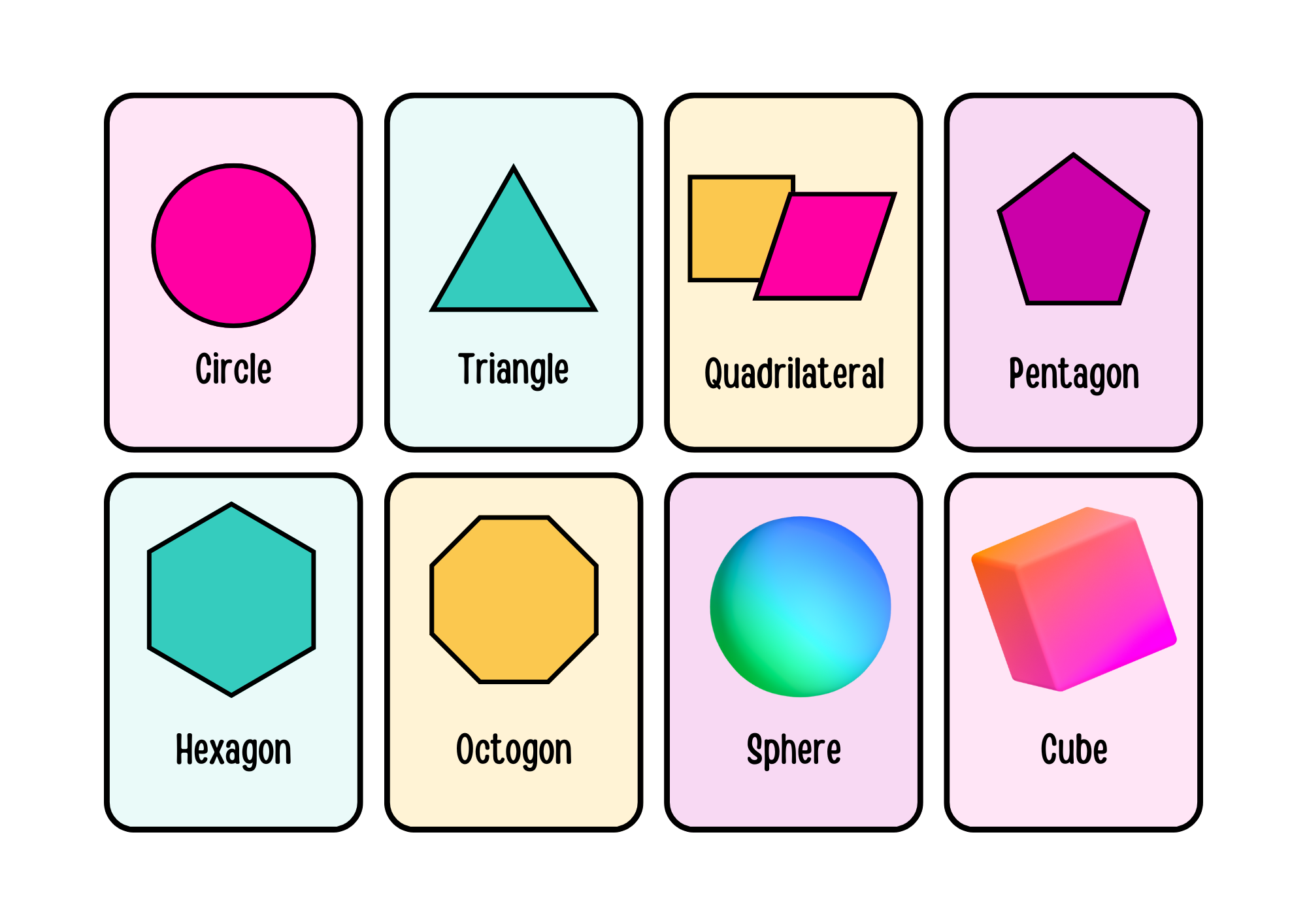
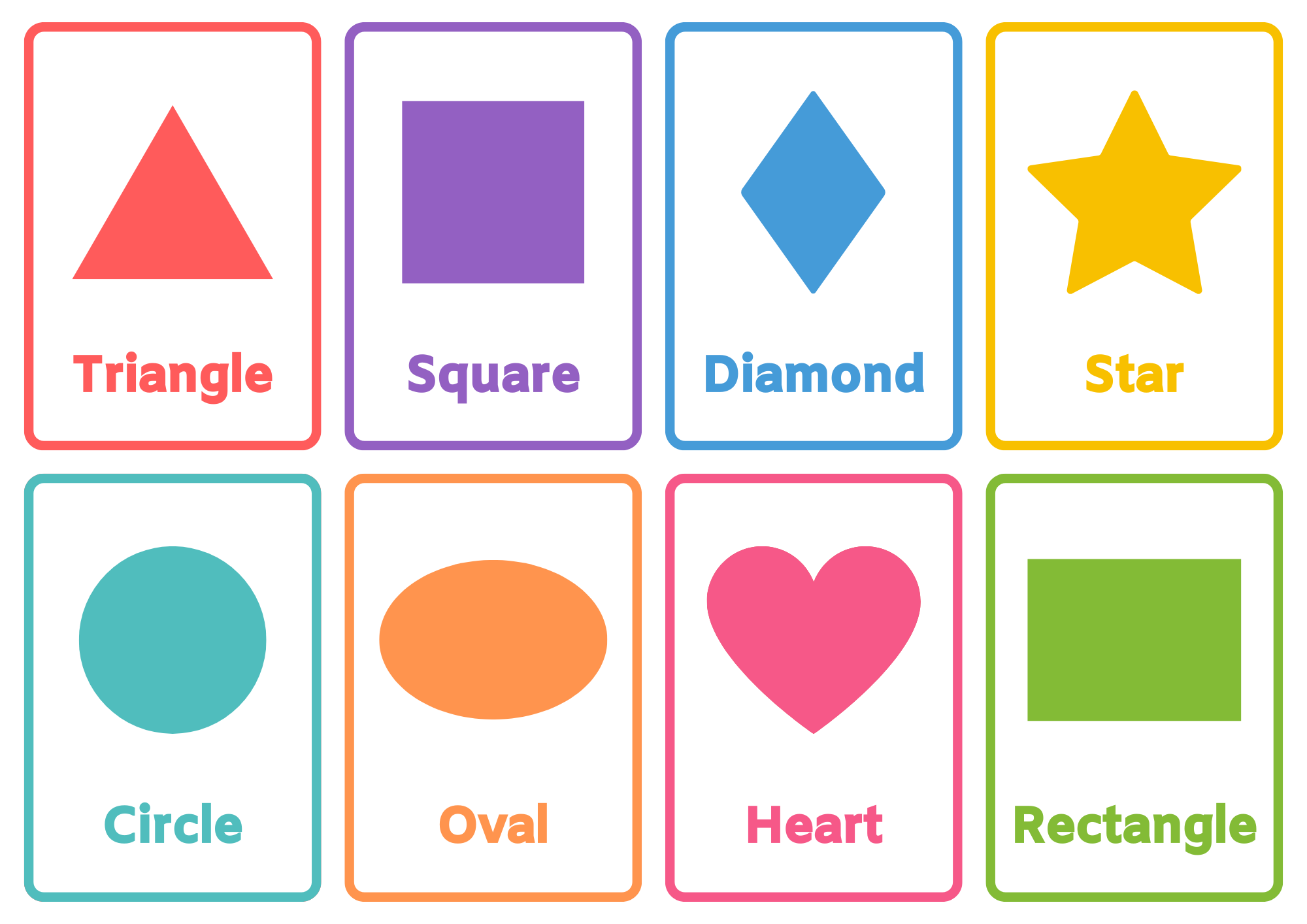
- Circle: Round shape with no corners (wheels, balls, sun)
- Square: Four equal sides and corners (windows, boxes)
- Triangle: Three sides and corners (pizza slice, mountains)
- Rectangle: Four sides with opposite sides equal (doors, books)
- Oval: Elongated circle (eggs, face shape)
- Pentagon: Five-sided shape (home plate in baseball)
Advanced Shapes
- Hexagon: Six sides (honeycomb, stop sign)
- Octagon: Eight sides (stop signs)
- Diamond (Rhombus): Four equal sides in a tilted square
- Star: Pointed shape with multiple vertices
- Heart: Curved shape with pointed bottom
- Crescent: Curved shape like a moon slice
Teaching Tips for Success
- Start with basic shapes (circle, square, triangle) before introducing complex ones
- Use real-life examples to make connections meaningful
- Repeat sessions regularly but keep them short (10-15 minutes)
- Celebrate small victories to maintain motivation
- Incorporate movement—walk in a circle, jump in a square formation
- Use songs and rhymes about shapes to enhance memory
- Be patient and encouraging throughout the learning process
Fun Facts About Shapes
- A circle has infinite lines of symmetry!
- Triangles are the strongest shape in construction
- Hexagons are found in nature—like honeycombs—because they're efficient for storing space
- Ancient Egyptians used geometric shapes to build the pyramids over 4,500 years ago