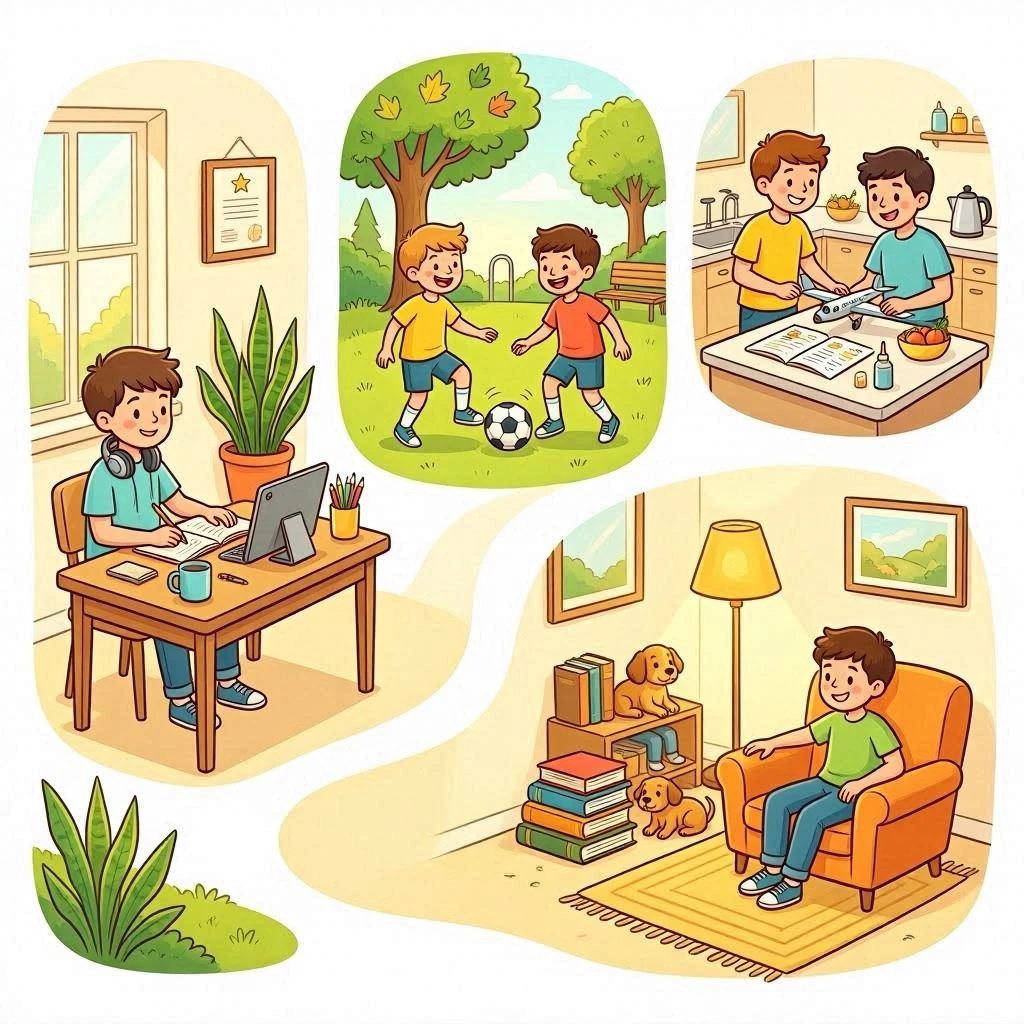
The question of how much screen time is "too much" has become one of the most discussed — and most anxiety-inducing — topics in modern parenting. Smartphones, tablets, computers, and television are woven into the fabric of daily family life, and the debate around their impact on children shows no sign of slowing down. But framing the discussion purely in terms of "how many hours" misses the most important variable of all: what children are actually doing with that time.
This guide offers a comprehensive, research-informed framework to help parents think clearly about screen time — distinguishing between the kinds of digital activity that genuinely support learning and development, and the kinds that offer little or no value. Our goal is not to make parents feel guilty about screens, but to empower them with the knowledge to make confident, informed decisions for their families.
The Critical Distinction: Active vs Passive Screen Use
Not all screen time is created equal, and treating it as a single undifferentiated category leads to unhelpful conversations. The most important distinction parents can make is between active and passive screen use.
Passive screen use involves consuming content without engagement: watching videos, scrolling through social media feeds, or sitting in front of a programme without interaction or thought. This type of screen use does offer some benefits — entertainment, relaxation, occasional educational value — but it does not build cognitive skills, and in excessive quantities it has been linked to reduced attention spans, disrupted sleep, and decreased physical activity.
Active screen use, by contrast, requires the child to think, decide, and engage. This includes educational quiz platforms like Bimtar, creative tools (drawing apps, music composition software, simple coding environments), video calls with family members, and guided documentary watching followed by discussion. Research consistently shows that active screen time produces measurable cognitive benefits, including improved logical reasoning, vocabulary development, and subject-matter knowledge.
When parents focus on maximising active screen time and minimising mindless passive consumption, the total number of hours becomes far less important than the quality of engagement within those hours.
What the Research Actually Says About Screen Time and Children
The scientific literature on screen time and child development is more nuanced than most media coverage suggests. The American Academy of Pediatrics (AAP) has updated its guidance multiple times in recent years, moving away from strict blanket time limits toward a more contextual approach that considers content quality, co-viewing with parents, and the child's overall balance of activities.
A comprehensive 2019 review published in JAMA Pediatrics, examining data from over 4,500 children, found that passive screen time (particularly commercial television) was associated with reduced language development in children under 3. However, interactive educational screen use was associated with vocabulary gains, improved mathematical reasoning, and greater curiosity about science — outcomes that mirror the benefits of high-quality face-to-face instruction.
A 2022 longitudinal study from University College London followed children over four years and found that children who used digital devices primarily for educational purposes showed no negative developmental outcomes, while those who used devices primarily for passive entertainment showed modest but measurable reductions in reading and social skills. The conclusion: the content and context of screen use matters far more than the time.
Age-Appropriate Guidelines: A Practical Framework
While rigid time limits are increasingly questioned by researchers, general age-based frameworks remain helpful starting points for parents. Here is a broadly evidence-informed approach:
- Under 18 months — Avoid screen use entirely, except for video calls with family members. Babies learn through physical interaction with their environment and with caregivers, not through screens.
- 18 months to 3 years — Limit to high-quality content watched together with a parent. Choose programmes specifically designed for this age group, with simple narratives and clear educational goals. Always watch with your child and discuss what you see together.
- Ages 3 to 5 — Up to one hour per day of high-quality programming, with parental co-viewing where possible. Begin introducing simple interactive educational tools. Prioritise physical play, outdoor time, and face-to-face interaction.
- Ages 6 to 12 — Place appropriate limits on total screen time, but focus primarily on content quality. This is the ideal age for interactive educational platforms like Bimtar, guided documentary viewing, and creative digital tools. Ensure a strong balance of physical activity, reading, and offline social interaction.
- Ages 13 and above — Shift from parental restriction to guided digital literacy. Help adolescents develop their own capacity for self-regulation, media literacy, and critical evaluation of online content.
The Sleep Connection: Why Timing Matters as Much as Duration
One of the most well-documented negative effects of screen use is its potential impact on sleep quality — and this is an area where parents should exercise genuine caution. The blue light emitted by screens suppresses melatonin production, the hormone that signals the body to prepare for sleep. When children use screens within the hour before bedtime, melatonin production is disrupted, making it harder to fall asleep and reducing the quality of deep, restorative sleep.
Research from the National Sleep Foundation consistently finds that children who use screens in the hour before bed take significantly longer to fall asleep, sleep fewer hours overall, and are more likely to report daytime sleepiness and difficulty concentrating at school. Given that adequate sleep is absolutely critical for memory consolidation, emotional regulation, and physical growth in children, protecting the pre-bedtime period from screens is one of the single most impactful screen-time decisions parents can make.
A simple and highly effective rule: no screens within 60 minutes of bedtime. Use this time instead for reading, conversation, gentle play, or a calming routine that helps the child's brain transition from active engagement to sleep.
Making Educational Screen Time Work: Bimtar as a Model
When choosing digital learning tools for your child, look for platforms that embody the principles of high-quality educational screen use. The ideal educational platform is interactive, not passive — requiring the child to actively think and respond rather than simply watch. It provides immediate, constructive feedback, so that learning happens in real time. It is free from commercial advertising and inappropriate content, ensuring that the child's attention is directed entirely toward learning. And it is designed to complement, rather than replace, other forms of learning and play.
Bimtar's Math Wizard and Animal Explorer quizzes are built on exactly these principles. Every session requires active cognitive engagement, delivers immediate explanatory feedback, and is completely free from advertising or commercial pressures. A Bimtar session of 10 to 15 minutes represents some of the most educationally productive screen time a child can have — genuinely active, genuinely educational, and genuinely enjoyable.
Creating a Family Digital Agreement
One of the most effective strategies for managing screen time in families is the creation of an explicit, mutually agreed "Family Digital Agreement" — a simple document that sets out the rules around screen use that the whole family (including parents!) commits to. Research shows that children who participate in creating screen-time rules are significantly more likely to adhere to them than children who have rules imposed without consultation.
A good Family Digital Agreement might include: agreed daily screen time budgets by activity type, screen-free times (mealtimes, the hour before bed, family time), designated educational screen time that counts separately from entertainment screen time, agreed consequences for excessive use that are firm but non-punitive, and a regular review schedule so the agreement can evolve as children grow and circumstances change.
Conclusion: Confident, Informed Choices
Screen time does not need to be a source of parental anxiety — it can be managed thoughtfully and confidently with the right framework. The key insights are simple: prioritise active over passive use, protect sleep by keeping screens out of the bedroom in the final hour of the day, involve children in setting their own rules, and choose educational platforms that treat your child as a capable learner. When screens serve learning, connection, and creativity, they are genuinely valuable tools. When they simply fill time, they are an opportunity cost — time that could have been spent reading, playing, exploring, or connecting. The choice, with the right information, is clear.
Make screen time educational with Bimtar!