How Bimtar Helps Your Child Learn — and Actually Enjoy It
Getting a child to sit down and study is one thing. Getting them to genuinely want to is something else entirely. Bimtar was built around one simple idea: if learning is fun, kids do it on their own. No nagging, no bribes, no "just five more minutes of practice."
Why Kids Lose Interest in Traditional Learning
Think about how most school learning works. A teacher explains something, children listen, then they practise on worksheets, and eventually a test arrives. For some kids, this works fine. For many others — especially those who learn by doing rather than listening — it feels like a slow, disconnected process where mistakes are embarrassing and success feels random.
Children do not lose interest in learning itself. They lose interest in a specific way of learning that does not match how their brains actually work best. Young children between the ages of 5 and 12 learn most deeply when they are curious, when the stakes feel low, and when they get to see results immediately. That is exactly what a well-designed quiz provides.
What Makes a Quiz Different from a Worksheet
A worksheet is one-way. You fill it out, hand it in, and wait days to find out what you got wrong — by which point your brain has already moved on. A quiz is a conversation. You answer, you find out immediately, you understand why, and you try again with that new knowledge fresh in your mind.
On Bimtar's Math Wizard Quiz, every wrong answer comes with a clear explanation that appears on screen the moment you answer. Your child does not have to wait until the next day's lesson to understand the mistake. The correction happens right there, while the question is still warm in their memory. That immediate loop — question, answer, feedback — is one of the most effective learning patterns we know.
Maths: Why Confidence Matters More Than Talent
Ask most adults which subject they struggled with at school, and maths comes up more than any other. But maths difficulty is rarely about ability. It is almost always about confidence — or the lack of it.
When a child decides early that they are "just not a maths person," that belief follows them through school and often into adult life. But it does not have to. Children who practise maths regularly in a low-pressure, game-like environment — where getting something wrong is just part of the process — build a completely different relationship with numbers. They start to see maths as something they can get better at through effort, not something they are either born good at or not.
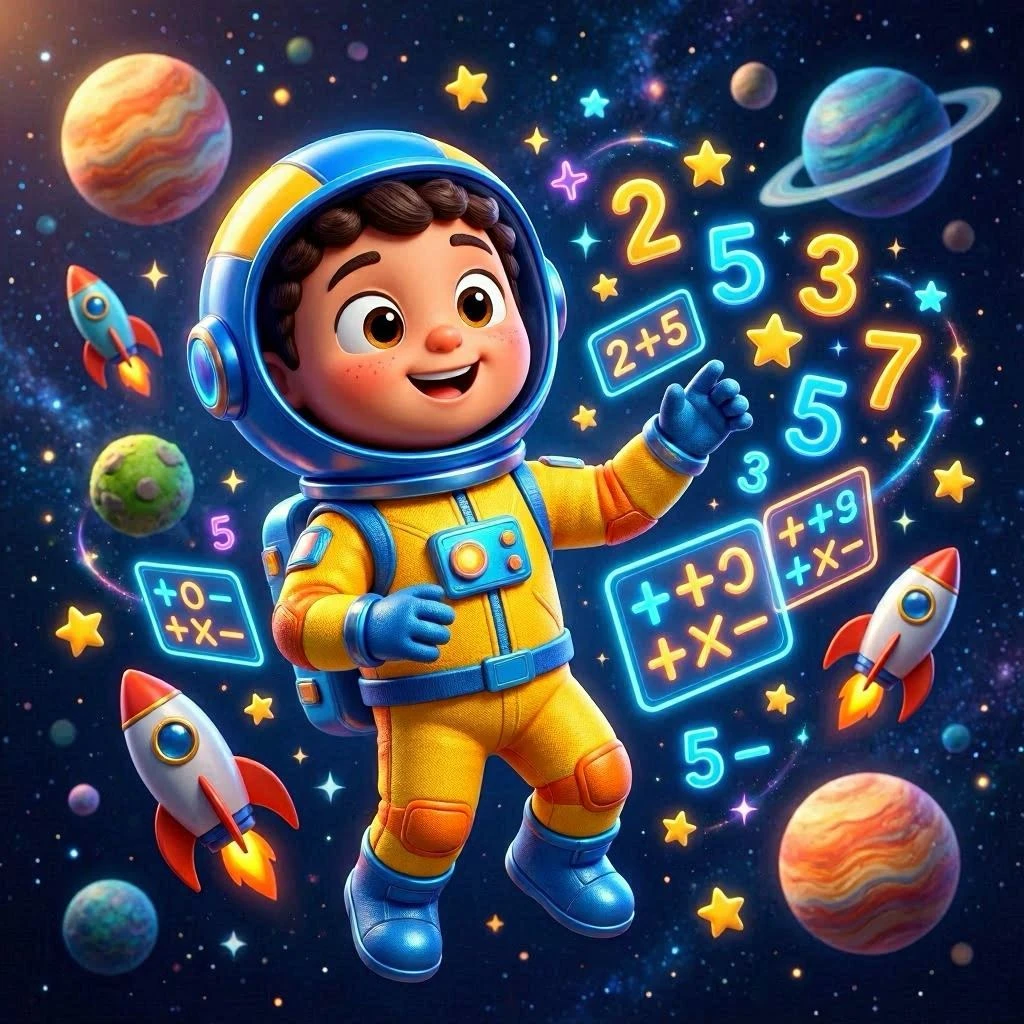
Bimtar's Math Quiz generates 10 fresh, random questions every single time. That means no two sessions are the same. Your child cannot memorise the answers — they have to actually think. And because the questions are different each time, even regular practice stays interesting.
Animals: Where Curiosity Begins
Children who love animals rarely need to be told to learn about them. They want to. The Animal Explorer Quiz works with that natural interest rather than against it. Every question is chosen because it has a surprising or fascinating answer — the kind of answer that a child wants to share with someone else.
Did you know a polar bear's skin is black? That an octopus has three hearts? That bats are the only mammals that can truly fly? These are not just trivia. They are entry points into bigger ideas — about how animals adapt to their environments, how different body designs solve different problems, and how diverse life on Earth actually is. Each question in the Animal Quiz is a tiny doorway into a bigger world.
A Safe Place to Learn
Bimtar contains no advertising, no social features, no accounts, and no personal data collection from children. There is nothing to sign up for and nothing that tracks your child. Parents can let their kids use the site knowing exactly what they will find: quizzes and articles, nothing else. That straightforward safety is not a bonus feature — it is the foundation everything else is built on.

Tips That Actually Work
- Make it a daily habit, not a homework task — 10 minutes after school, before screen time, works better than longer sessions on weekends. Regular beats long every time.
- Do not focus on the score — Ask what they learned, not what they got. "What was the hardest question?" is more useful than "How many did you get right?"
- Go through wrong answers together — The explanation shown after a wrong answer is often the most interesting part. Read it together and talk about it.
- Try both quizzes in the same session — Switching between maths and animals keeps the brain engaged longer and helps avoid boredom.
- Connect it to real life — If they learned that elephants are the largest land animals, watch a clip about elephants that evening. Real-world connections make quiz facts stick.
- Let them pick when — Giving children some control over when they do the quiz (before dinner? after school?) increases how much they want to do it.
What Regular Learners Actually Experience
Children who use Bimtar a few times a week tend to show one consistent change over time: they stop saying they cannot do something before they try. That shift — from "I am not good at this" to "Let me have a go" — is worth more than any individual quiz score. It is the beginning of a habit of trying, and that habit will serve them in every subject they ever study.
Learning is not a talent you are born with. It is something you do — and Bimtar is built to make the doing as enjoyable as possible. Come back any time, try both quizzes, read the articles, and see how much your child can discover.